
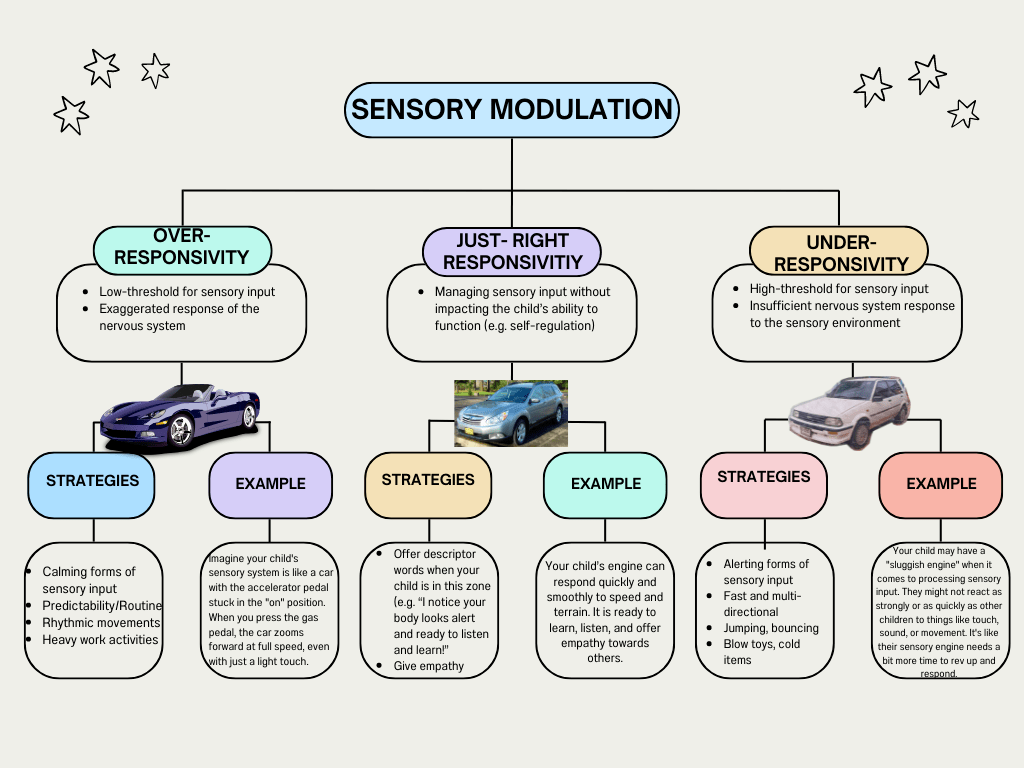
Sensory modulation refers to the brain’s ability to regulate and process sensory information from the environment. It’s like the brain’s filter, deciding what sensations are important and how to respond to them. For a parent, understanding sensory modulation can help in recognizing and supporting a child who may have difficulty processing sensory input, which can impact their behavior and daily functioning.
Think of the sensory system like an engine. In a well-functioning engine, when you press the accelerator, the engine responds smoothly and quickly. This is that “just right” response. When the child is able to use their executive functioning skills to stop, think and then do.
Now, imagine an under-responsive sensory system as an engine that takes a bit longer to rev up when you press the accelerator. It might need more time and stimulation to get going compared to a typical engine. Similarly, a person with an under-responsive sensory system might need more intense or frequent sensory input to notice or respond to their surroundings.
An under-responsive child may seem unresponsive or unfazed by sensory input that typically elicits a response in others. They may appear lethargic, have difficulty maintaining attention or focus, and seem unaware of their surroundings. For example, they might not react to loud noises, seek out sensory stimulation, or respond to physical touch or pain in the same way as their peers. This lack of responsiveness can affect their ability to engage with their environment, participate in activities, and develop social connections. They may require extra support and encouragement to notice and respond to sensory input effectively.
Furthermore, when you have an over-responsive nervous system you press the accelerator just a little, the engine revs up too much, causing a jolt or an exaggerated response. Similarly, someone with an over-responsive sensory system might react strongly or negatively to even mild sensory input because their system is overly sensitive, causing them to feel overwhelmed or uncomfortable.
A child who is over-responsive to sensory input may exhibit behaviors such as being easily startled by loud noises, avoiding certain textures or clothing fabrics, becoming upset or anxious in busy or crowded environments, and reacting strongly to bright lights or strong smells. They may also withdraw from sensory experiences altogether, seeking to avoid situations that trigger discomfort or overwhelm. This sensitivity can impact their daily routines and interactions, leading to challenges in social, academic, and even self-care activities.
I created a Sensory Modulation Map using the car analogy. This was designed to help add clarity for parents in understanding their own child. I would love to hear what you think!
 Heart of Nature Occupational Therapy
Leave a comment